
Black History Month at Abrigo
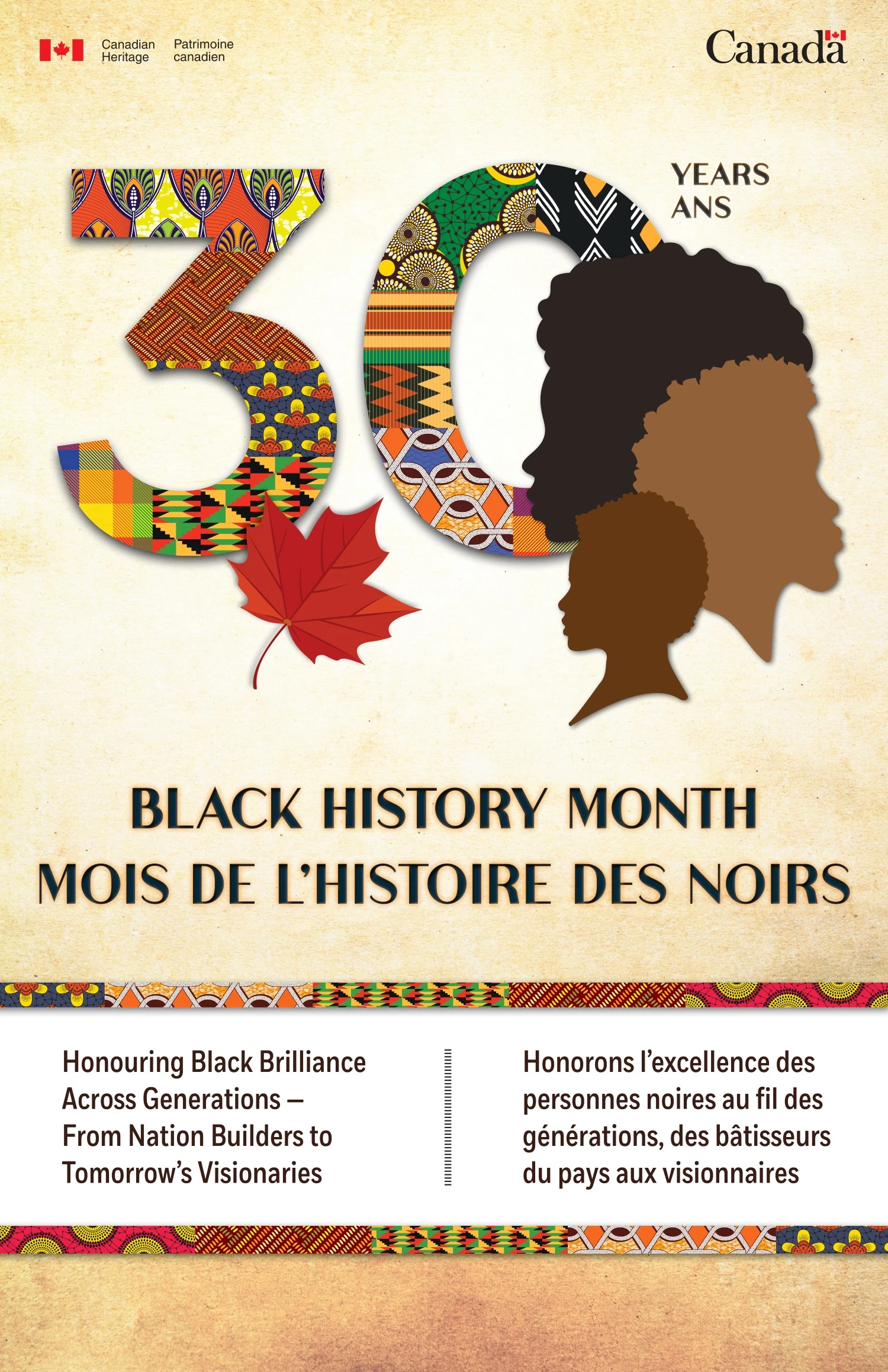
During Black History Month, we honor the achievements, resilience, and lasting contributions of Black individuals and communities throughout history. Abrigo recognizes the profound impact Black leaders, innovators, creators, and advocates have made and continue to make across every field and generation.
This month is both a celebration and a reminder of Abrigo’s ongoing responsibility to work toward greater equity and inclusion. We are committed to fostering a community where diverse voices are valued, respected, and empowered not just in February, but every day of the year.
Each week this month, Abrigo will be sharing brief weekly reflections that center Black voices, leadership, and history, with a particular lens on equity, care, and justice.
Black history is not only about struggle; it is also about resilience, creativity, leadership, and community care.
We are also highlighting Black leadership in gender-based violence prevention and advocacy in Canada.
Leaders such as Carla Neto, Executive Director of Women’s Habitat of Etobicoke and former Board Member of Abrigo Centre, remind us that GBV work is deeply connected to prevention, systems change, and community-rooted care. With decades of experience in anti-violence work, her leadership reflects how survivor-centered, feminist, and anti-oppressive approaches can shape safer communities.
Black-led GBV advocacy has long emphasized meeting survivors where they are, addressing systemic barriers alongside individual harm, and centering dignity, choice, and collective responsibility.
Finally, as part of our Black History Month reflections, we wanted to share a brief learning moment on intersectionality and why it matters deeply in gender-based violence (GBV) prevention and response.
Intersectionality reminds us that people do not experience violence — or healing — through a single identity. Each person’s experience is shaped by the intersection of their social identities (such as race, gender, class, disability, sexual orientation) and the systems of oppression that operate around them (such as racism, colonialism, sexism, ableism, and classism).
In GBV work, an intersectional and trauma-informed approach helps us recognize that:
- Oppression operates at multiple levels (personal, institutional, systemic)
- Different forms of oppression interact and shape safety, access to resources, and well-being
- Trauma is cumulative and influenced by social and structural conditions
- Survivors’ strengths, coping strategies, and healing practices are rooted in their lived realities and communities
This lens challenges us to move beyond one-size-fits-all approaches and instead respond with curiosity, humility, and care — especially in a world where many communities are carrying layered and ongoing harm.
Background
Black History in Canada
Black Canadians and their communities have been a part of shaping Canada’s heritage and identity since the arrival of Mathieu Da Costa, a navigator and interpreter whose presence in Canada dates back to the early 1600s.
The role of Black people and their communities in Canada has largely been ignored as a key part of Canada’s history. There is little mention that some of the Loyalists who came here after the American Revolution and settled in the Maritimes were people of African descent, nor the fact that many soldiers of African descent made many sacrifices in wartime as far back as the War of 1812.
Few people in Canada are aware of the fact that African people were once enslaved in the territory that is now known as Canada, or of how those who fought enslavement helped to lay the foundation of Canada’s diverse and inclusive society.
Recognizing Black History Month in Canada
In 1978, the Ontario Black History Society (OBHS) was established. Its founders, including Dr. Daniel G. Hill and Wilson O. Brooks, presented a petition to the City of Toronto to have February formally proclaimed as Black History Month. In 1979, the first-ever Canadian proclamation was issued by Toronto.
The first Black History Month in Nova Scotia was observed in 1988 and later renamed African Heritage Month in 1996.
In December 1995, the House of Commons officially recognized February as Black History Month in Canada following a motion introduced by Dr. Jean Augustine. The House of Commons carried the motion unanimously.
In February 2008, Senator Donald Oliver, the first Black man appointed to the Senate, introduced a motion to recognize the contributions of Black Canadians and February as Black History Month in Canada. It received unanimous approval and was adopted on March 4, 2008.